Septic Tanks Explained: How They Work, Costs & Care (2026)
Roughly one in five U.S. households relies on a septic system rather than a municipal sewer connection — yet most homeowners never think about theirs until something goes wrong. This guide covers the basics every septic owner should know: how the system actually works, what it costs to install, repair, and maintain in 2026, and the care habits that keep a system running for decades instead of years.
How a Septic Tank Actually Works
A septic system has two main parts working together: the tank and the drain field (also called a leach field). Understanding what happens at each stage makes the maintenance advice later in this guide make a lot more sense.
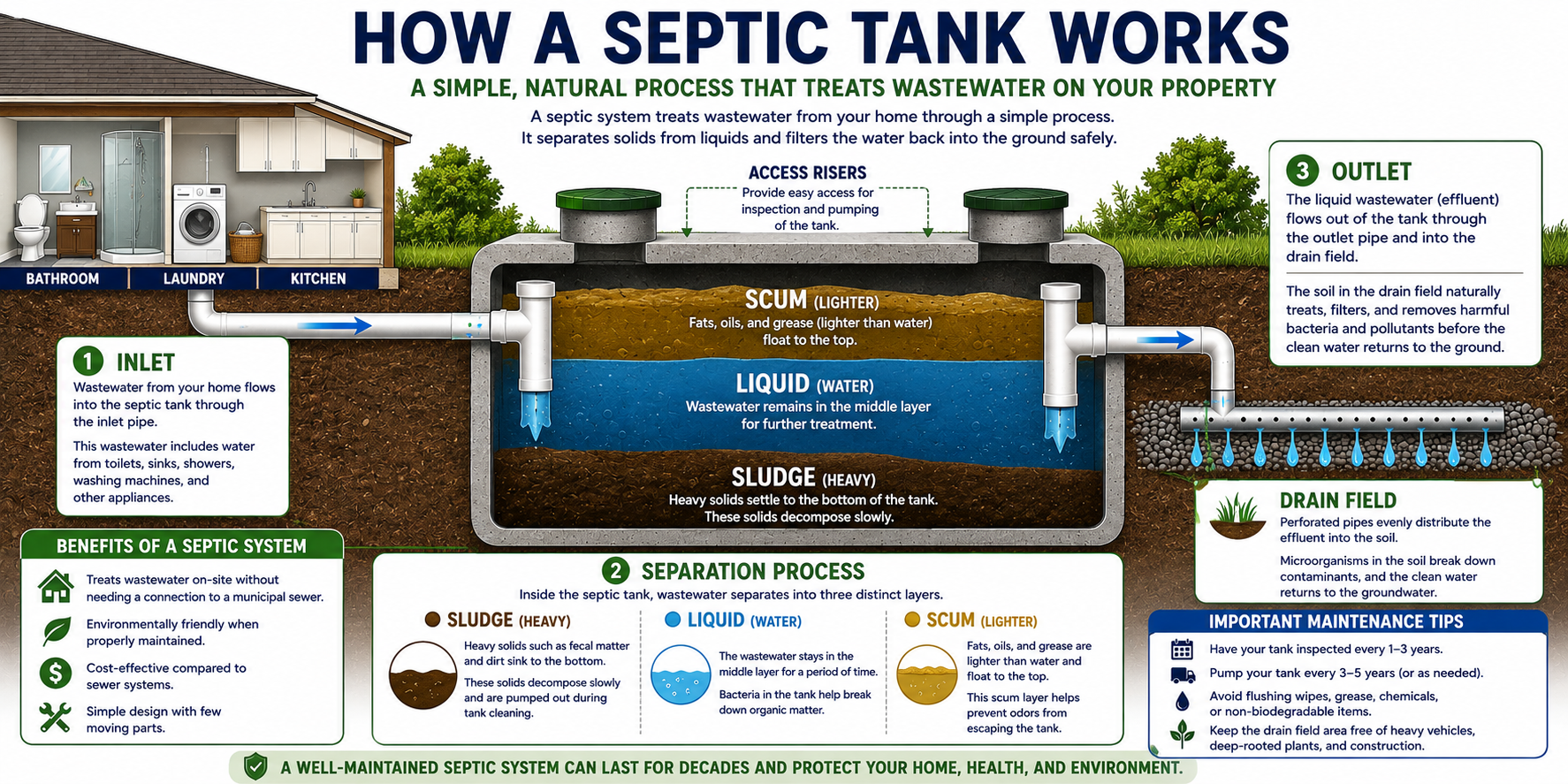
Step 1: Wastewater Enters the Tank
Everything that goes down a drain in the house — toilets, sinks, showers, washing machine — flows through a single pipe into the buried septic tank, typically a 1,000 to 1,500 gallon concrete, plastic, or fiberglass container.
Step 2: Solids Settle, Grease Floats
Inside the tank, wastewater separates into three layers. Heavier solids sink to the bottom and form a layer of sludge. Fats, oils, and grease float to the top and form a layer of scum. In between sits a layer of relatively clear liquid called effluent.
Step 3: Bacteria Break Down Waste
Naturally occurring anaerobic bacteria inside the tank continuously digest the sludge and scum layers, breaking down organic solids over time. This is the core biological process that makes a septic tank work at all — it’s also exactly what a product like Septifix is designed to support and accelerate.
Step 4: Effluent Moves to the Drain Field
As new wastewater enters the tank, an equivalent volume of clarified effluent exits through an outlet pipe into the drain field — a network of perforated pipes buried in gravel-filled trenches. There, the effluent filters down through the soil, which provides the final stage of natural treatment before water rejoins the groundwater system.
Types of Septic Systems
- Conventional (anaerobic) systems — the most common type, relying on naturally occurring bacteria that don’t require oxygen. Generally the least expensive option, though they need a larger drain field
- Aerobic treatment units (ATUs) — use a pump to introduce oxygen into the tank, activating aerobic bacteria that break down waste more efficiently. More expensive to install and run, but often required on lots with limited space or challenging soil
- Mound systems — build the drain field up above natural grade using imported fill, used where a high water table, shallow bedrock, or poor soil rules out a conventional in-ground field
- Alternative and engineered systems — pressure-distribution, sand-filter, and other specialized designs used when site conditions require a customized solution beyond the standard options above
Septic Tank Costs in 2026
| Item | Typical Cost (2026) |
|---|---|
| Conventional (anaerobic) system installation | $3,000–$8,000 |
| Aerobic treatment system (ATU) installation | $10,000–$20,000 |
| Mound system installation | $10,000–$20,000+ |
| Full system replacement (tank + drain field) | $6,000–$15,000, national average around $8,000 |
| Routine pumping (1,000–1,500 gal tank) | $300–$600, national average around $400–$450 |
| Annual inspection | $100–$250 |
| General repairs | $165–$6,500, average around $1,830 |
| Drain field replacement | Around $7,000 |
| Riser installation | $300–$600 |
| Pump replacement (ATU) | $800–$1,400 |
Location, soil conditions, tank accessibility, and how long it’s been since the last pumping all shift these numbers meaningfully — a straightforward install on sandy loam can run under $6,000, while an engineered mound system on clay with a high water table can exceed $18,000. For soil- and region-specific cost breakdowns, see the state guides linked at the end of this article.
Septic Tank Care: What Actually Matters
- Pump every 3–5 years — the single most important maintenance task, per EPA guidance. Larger households or higher water use may need more frequent service
- Only flush toilet paper and human waste — “flushable” wipes, feminine hygiene products, paper towels, and cooking grease don’t break down properly and are one of the leading causes of early system failure
- Space out heavy water use — running the washing machine, dishwasher, and multiple showers back-to-back can overload the tank’s capacity to separate solids properly
- Keep the drain field clear — no parking, driving, or planting trees with invasive root systems over the drain field area
- Know where your tank is — about 63% of homeowners don’t know their tank’s exact location, which adds unnecessary cost and delay when service is needed. Check your property records or the original permit on file with your local health department
- Support the bacteria doing the work — since bacterial digestion is what breaks down solids between pumpings, avoiding excessive antibacterial soap and harsh chemical drain cleaners helps keep that process functioning as intended
Warning Signs You Shouldn’t Ignore
- Slow drains throughout the house (not just one fixture)
- Gurgling sounds in plumbing
- Sewage odor near the tank or drain field
- Standing water or unusually lush grass over the drain field
- Sewage backup into tubs, showers, or toilets — treat this as urgent
Where a Product Like Septifix Fits Into the Picture
Since a septic tank’s core function depends on bacteria continuously breaking down solids, supporting that biological process is one of the most direct ways to extend the time between pumpings and reduce strain on the drain field. Septifix is a monthly tablet treatment formulated with concentrated bacteria and enzymes designed to help break down the sludge layer inside the tank, working alongside — not instead of — regular pumping and sensible water-use habits.
It won’t fix a system that’s already failed, replace a required drain field repair, or substitute for professional service. But as part of a maintenance routine built around the fundamentals above, it’s a straightforward way to support the same natural process your septic system already relies on.
Frequently Asked Questions
- How does a septic tank work?
- Wastewater from the house flows into the buried tank, where it separates into three layers: sludge (heavier solids) at the bottom, scum (fats, oils, grease) on top, and effluent (relatively clear liquid) in between. Anaerobic bacteria continuously digest the sludge and scum, while clarified effluent exits to the drain field, where soil provides the final stage of treatment before water rejoins the groundwater system.
- What are the different types of septic systems?
- Conventional (anaerobic) systems are the most common and least expensive, relying on bacteria that don’t need oxygen. Aerobic treatment units (ATUs) use a pump to introduce oxygen for more efficient breakdown, at higher cost. Mound systems raise the drain field above grade for sites with a high water table or shallow bedrock. Alternative and engineered systems, like pressure-distribution or sand-filter designs, are used for challenging site conditions.
- How much does a septic system cost in 2026?
- A conventional system installation runs $3,000-$8,000, an aerobic treatment system $10,000-$20,000, and a mound system $10,000-$20,000+. Full replacement (tank plus drain field) averages around $8,000 nationally. Routine pumping runs $300-$600, and annual inspection $100-$250.
- What should never go into a septic tank?
- “Flushable” wipes, feminine hygiene products, paper towels, and cooking grease don’t break down properly and are among the leading causes of early system failure. Only toilet paper and human waste should be flushed.
Soil type, water table depth, and local regulations all affect how a septic system should be designed and maintained where you live. For a deeper look at your specific region, see the state guides on this site covering Georgia, Florida, California, and Washington.
This article is for general informational purposes and reflects typical septic system design, costs, and maintenance practices as of 2026. Costs vary by region, contractor, and site conditions — always get quotes from licensed local septic professionals. Product results vary by individual system condition and usage.