Septic Tanks Explained: How They Work, Costs & Care (2026)

Septic Tanks Explained: How They Work, Costs & Care (2026)

Quick answer: Roughly one in five U.S. households uses a septic system instead of municipal sewer. Wastewater flows into a buried tank and separates into sludge, scum, and effluent; bacteria digest the solids while clarified effluent moves out to a drain field for final soil-based treatment. A conventional system costs $3,000-$8,000 to install, with aerobic and mound systems running $10,000-$20,000+. The single most important maintenance task is pumping every 3-5 years — skipping it is the most common route to a $5,000-$25,000+ drain field failure.

Roughly one in five U.S. households relies on a septic system rather than a municipal sewer connection — yet most homeowners never think about theirs until something goes wrong. This guide covers the basics every septic owner should know: how the system actually works, what it costs to install, repair, and maintain in 2026, and the care habits that keep a system running for decades instead of years.

How a Septic Tank Actually Works

A septic system has two main parts working together: the tank and the drain field (also called a leach field). Understanding what happens at each stage makes the maintenance advice later in this guide make a lot more sense.
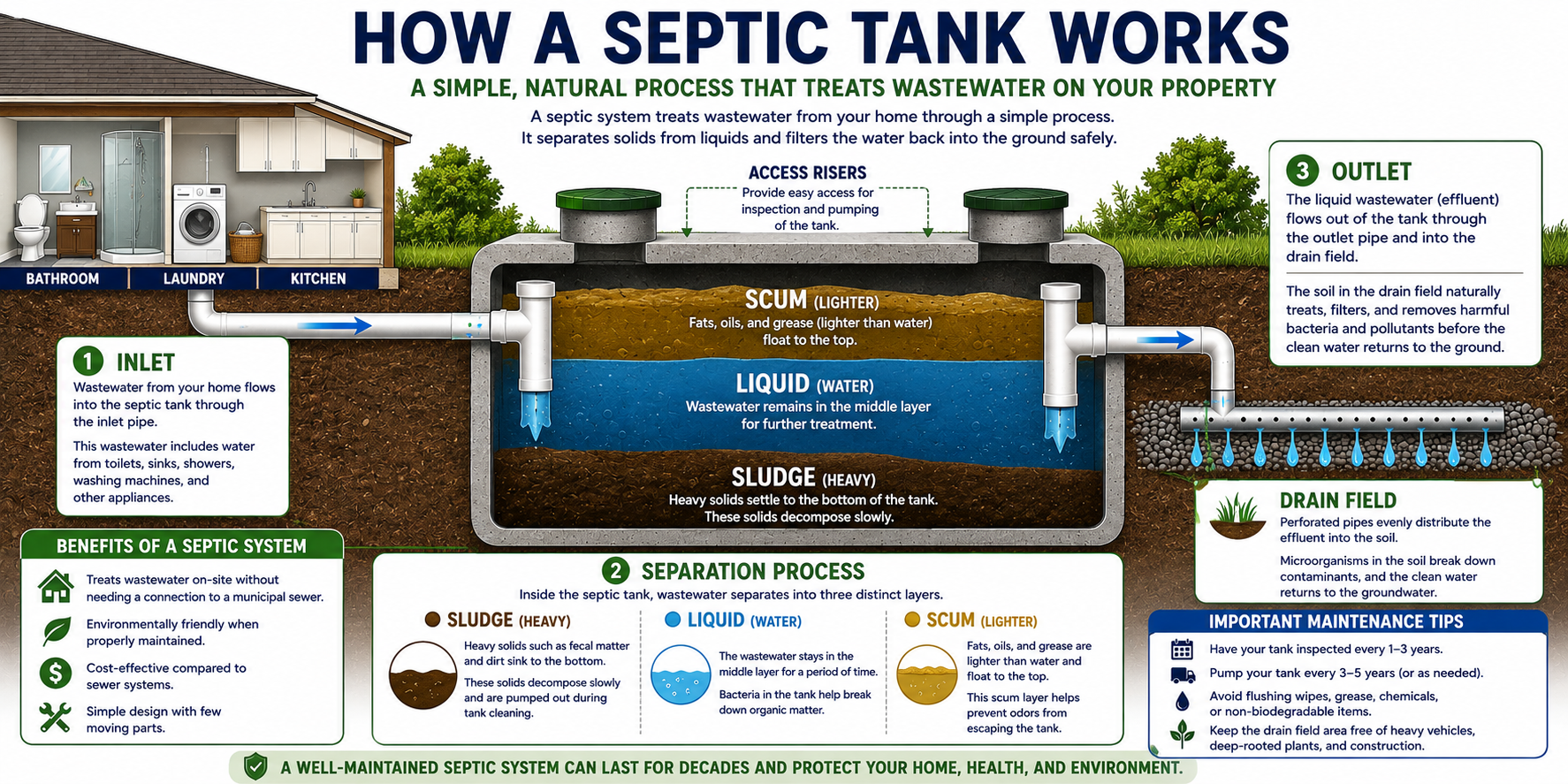
Diagram showing how a septic tank works: wastewater enters through the inlet, separates into scum, liquid, and sludge layers inside the tank, and treated effluent exits through the outlet to the drain field

Step 1: Wastewater Enters the Tank

Everything that goes down a drain in the house — toilets, sinks, showers, washing machine — flows through a single pipe into the buried septic tank, typically a 1,000 to 1,500 gallon concrete, plastic, or fiberglass container.

Step 2: Solids Settle, Grease Floats

Inside the tank, wastewater separates into three layers. Heavier solids sink to the bottom and form a layer of sludge. Fats, oils, and grease float to the top and form a layer of scum. In between sits a layer of relatively clear liquid called effluent.

Step 3: Bacteria Break Down Waste

Naturally occurring anaerobic bacteria inside the tank continuously digest the sludge and scum layers, breaking down organic solids over time. This is the core biological process that makes a septic tank work at all — it’s also exactly what a product like Septifix is designed to support and accelerate.

Step 4: Effluent Moves to the Drain Field

As new wastewater enters the tank, an equivalent volume of clarified effluent exits through an outlet pipe into the drain field — a network of perforated pipes buried in gravel-filled trenches. There, the effluent filters down through the soil, which provides the final stage of natural treatment before water rejoins the groundwater system.

Why this sequence matters for maintenance: Every septic problem ultimately traces back to one of these four steps breaking down — usually because solids build up faster than bacteria can process them, and eventually reach the drain field where they don’t belong.

Types of Septic Systems

  • Conventional (anaerobic) systems — the most common type, relying on naturally occurring bacteria that don’t require oxygen. Generally the least expensive option, though they need a larger drain field
  • Aerobic treatment units (ATUs) — use a pump to introduce oxygen into the tank, activating aerobic bacteria that break down waste more efficiently. More expensive to install and run, but often required on lots with limited space or challenging soil
  • Mound systems — build the drain field up above natural grade using imported fill, used where a high water table, shallow bedrock, or poor soil rules out a conventional in-ground field
  • Alternative and engineered systems — pressure-distribution, sand-filter, and other specialized designs used when site conditions require a customized solution beyond the standard options above

Septic Tank Costs in 2026

ItemTypical Cost (2026)
Conventional (anaerobic) system installation$3,000–$8,000
Aerobic treatment system (ATU) installation$10,000–$20,000
Mound system installation$10,000–$20,000+
Full system replacement (tank + drain field)$6,000–$15,000, national average around $8,000
Routine pumping (1,000–1,500 gal tank)$300–$600, national average around $400–$450
Annual inspection$100–$250
General repairs$165–$6,500, average around $1,830
Drain field replacementAround $7,000
Riser installation$300–$600
Pump replacement (ATU)$800–$1,400

Location, soil conditions, tank accessibility, and how long it’s been since the last pumping all shift these numbers meaningfully — a straightforward install on sandy loam can run under $6,000, while an engineered mound system on clay with a high water table can exceed $18,000. For soil- and region-specific cost breakdowns, see the state guides linked at the end of this article.

The most expensive mistake: Skipping pumping until a tank is already overdue by several years. Hardened, long-neglected sludge takes more time and labor to remove, and by that point, solids have often already reached the drain field — the single most expensive part of the system to replace.

Septic Tank Care: What Actually Matters

  • Pump every 3–5 years — the single most important maintenance task, per EPA guidance. Larger households or higher water use may need more frequent service
  • Only flush toilet paper and human waste — “flushable” wipes, feminine hygiene products, paper towels, and cooking grease don’t break down properly and are one of the leading causes of early system failure
  • Space out heavy water use — running the washing machine, dishwasher, and multiple showers back-to-back can overload the tank’s capacity to separate solids properly
  • Keep the drain field clear — no parking, driving, or planting trees with invasive root systems over the drain field area
  • Know where your tank is — about 63% of homeowners don’t know their tank’s exact location, which adds unnecessary cost and delay when service is needed. Check your property records or the original permit on file with your local health department
  • Support the bacteria doing the work — since bacterial digestion is what breaks down solids between pumpings, avoiding excessive antibacterial soap and harsh chemical drain cleaners helps keep that process functioning as intended

Warning Signs You Shouldn’t Ignore

  • Slow drains throughout the house (not just one fixture)
  • Gurgling sounds in plumbing
  • Sewage odor near the tank or drain field
  • Standing water or unusually lush grass over the drain field
  • Sewage backup into tubs, showers, or toilets — treat this as urgent

Where a Product Like Septifix Fits Into the Picture

Since a septic tank’s core function depends on bacteria continuously breaking down solids, supporting that biological process is one of the most direct ways to extend the time between pumpings and reduce strain on the drain field. Septifix is a monthly tablet treatment formulated with concentrated bacteria and enzymes designed to help break down the sludge layer inside the tank, working alongside — not instead of — regular pumping and sensible water-use habits.

It won’t fix a system that’s already failed, replace a required drain field repair, or substitute for professional service. But as part of a maintenance routine built around the fundamentals above, it’s a straightforward way to support the same natural process your septic system already relies on.

Read the Full Septifix Review →
Affiliate link — we may earn a commission at no extra cost to you

Frequently Asked Questions

How does a septic tank work?
Wastewater from the house flows into the buried tank, where it separates into three layers: sludge (heavier solids) at the bottom, scum (fats, oils, grease) on top, and effluent (relatively clear liquid) in between. Anaerobic bacteria continuously digest the sludge and scum, while clarified effluent exits to the drain field, where soil provides the final stage of treatment before water rejoins the groundwater system.
What are the different types of septic systems?
Conventional (anaerobic) systems are the most common and least expensive, relying on bacteria that don’t need oxygen. Aerobic treatment units (ATUs) use a pump to introduce oxygen for more efficient breakdown, at higher cost. Mound systems raise the drain field above grade for sites with a high water table or shallow bedrock. Alternative and engineered systems, like pressure-distribution or sand-filter designs, are used for challenging site conditions.
How much does a septic system cost in 2026?
A conventional system installation runs $3,000-$8,000, an aerobic treatment system $10,000-$20,000, and a mound system $10,000-$20,000+. Full replacement (tank plus drain field) averages around $8,000 nationally. Routine pumping runs $300-$600, and annual inspection $100-$250.
What should never go into a septic tank?
“Flushable” wipes, feminine hygiene products, paper towels, and cooking grease don’t break down properly and are among the leading causes of early system failure. Only toilet paper and human waste should be flushed.
Explore Region-Specific Guides

Soil type, water table depth, and local regulations all affect how a septic system should be designed and maintained where you live. For a deeper look at your specific region, see the state guides on this site covering Georgia, Florida, California, and Washington.

This article is for general informational purposes and reflects typical septic system design, costs, and maintenance practices as of 2026. Costs vary by region, contractor, and site conditions — always get quotes from licensed local septic professionals. Product results vary by individual system condition and usage.

Is SEPTIFIX a Scam? Honest Review, Evidence, and Buyer’s Guide


Is SEPTIFIX a Scam? Honest Review, Evidence, and Buyer’s Guide

Quick answer: No — SEPTIFIX is not a scam. It’s a monthly septic tank treatment tablet with a real, explainable mechanism (oxygen release plus aerobic bacteria strains that digest waste and cut odor), sold through the official site with a 60-day money-back guarantee. It isn’t a miracle cure and won’t fix a tank that’s already failed or replace pumping — most “scam” complaints trace back to counterfeit resellers, unrealistic overnight expectations, or using it on a system that needed professional repair first.

If you’ve been searching for a solution to septic system issues, you’ve probably come across SEPTIFIX — a septic tank treatment marketed as a way to save homeowners money on pumping and repairs. With that kind of promise comes an obvious question: is it actually legitimate, or too good to be true?

Here’s an honest look at what SEPTIFIX is, how it works, where scam concerns actually come from, and what the evidence supports.

What SEPTIFIX Is and How It Works

SEPTIFIX is a septic tank treatment sold as flushable tablets rather than the liquids or powders most competing brands use. Each tablet is designed to dissolve and release a combination of oxygen and biological compounds that support aerobic bacteria — bacteria that digest organic waste faster than the anaerobic bacteria naturally present in a sealed tank. The mechanism itself (oxygen plus bacteria) isn’t unusual in septic treatment products; SEPTIFIX’s pitch is that the oxygen-release step makes the bacterial activity meaningfully more effective than a bacteria-only formula.

Where the Scam Concerns Actually Come From

“Too good to be true” skepticism is a reasonable default online, especially for a product claiming to reduce pumping costs and eliminate odor. Digging into the actual complaints, they cluster into a few consistent categories rather than pointing to fraud:

  • Unofficial resellers — negative reviews disproportionately trace back to purchases made outside the official site, where counterfeit or expired product is a real risk
  • Overnight-fix expectations — SEPTIFIX is a gradual biological process, not an instant chemical reaction; buyers expecting results in a day or two are often disappointed regardless of whether the product is working as designed
  • Already-failed systems — a tank with a cracked wall, collapsed baffle, or fully failed drain field needs physical repair, not a maintenance tablet, and using SEPTIFIX in that situation won’t produce the results a functioning system would see
The clearest legitimacy signal: a working, honored money-back guarantee. Scam operations generally don’t process refunds reliably — the fact that verified customers report receiving refunds through the official channel is a stronger signal than marketing copy either way.

What SEPTIFIX Can and Can’t Do

What it’s designed to do What it isn’t
Support aerobic bacterial digestion of tank solids A repair for a cracked tank, collapsed baffle, or damaged pipe
Reduce hydrogen sulfide odor at the source An instant, same-day fix
Slow sludge buildup between pump-outs A substitute for pumping altogether
Support a functioning system’s ongoing maintenance A fix for an already-failed drain field

How to Buy It Safely

The official website is the only source that guarantees an authentic product, the 60-day money-back guarantee, and legitimate customer support. Third-party marketplace listings and unfamiliar resale sites aren’t verified — unusually low prices, no visible guarantee, and no contact information are the practical red flags worth checking before you buy anywhere other than the official site.

The Bottom Line

Weighing the actual mechanism, the pattern behind negative reviews, and the money-back guarantee together, SEPTIFIX holds up as a legitimate maintenance product rather than a scam. It works best as one part of a regular maintenance routine on a system that’s otherwise functioning — not as an emergency fix for a tank that’s already in trouble.

Read the Full SEPTIFIX Review →
Affiliate link — we may earn a commission at no extra cost to you

Frequently Asked Questions

Is SEPTIFIX a scam?
No. SEPTIFIX is a legitimate septic tank treatment tablet with a real, explainable mechanism — oxygen-releasing compounds paired with aerobic bacteria strains that digest waste and reduce odor. It’s sold with a 60-day money-back guarantee through the official site. Most scam concerns trace back to unofficial resellers, unrealistic expectations of an overnight fix, or confusing a maintenance product with a repair for a genuinely failed system.
How long does SEPTIFIX take to work?
Many users report noticeable odor reduction within one to three weeks of consistent monthly use. Reducing existing sludge buildup takes longer, typically several weeks to a few months of regular tablets, since it’s a gradual biological process rather than an instant fix.
Can SEPTIFIX replace septic tank pumping?
No. It can reduce how often you need a pump-out by slowing sludge buildup, but it does not eliminate the need for pumping, especially for a tank that’s already overdue or damaged. It’s a maintenance product, not a repair or replacement for physical solids removal.
Where is it safe to buy SEPTIFIX?
The official website is the only source that guarantees an authentic product, the 60-day money-back guarantee, and legitimate customer support. Listings on third-party marketplaces or unfamiliar sites are not verified and carry a real risk of counterfeit or expired stock.

This article reflects general product information and publicly available customer feedback as of 2026; individual results vary by system condition and usage. This post contains affiliate links — if you purchase through a link here, we may earn a commission at no extra cost to you.

Signs Your Septic Tank Is Full: How to Tell Before It’s Too Late


Signs Your Septic Tank Is Full: How to Tell Before It’s Too Late

Infographic listing signs a septic tank is full: slow drains, gurgling noises, unpleasant odors, pooling water, sewage backup, lush green grass, trouble flushing, and time since last pumping

Quick answer: A full septic tank shows up as slow drains across the whole house, gurgling pipes, unpleasant odor indoors or out, pooling water or unusually lush grass over the drain field, trouble flushing toilets, and — in the worst case — sewage backing up into the home. Even without symptoms, it may simply be time: most tanks need pumping every 3-5 years. Any sewage backup indoors should be treated as an emergency.

Most homeowners rarely think about their septic tank until a problem arises. Yet your septic system is one of the most important parts of your home’s infrastructure — it quietly processes waste every day, ensuring your household runs smoothly. However, septic tanks don’t last forever without maintenance. Over time, they fill with solid waste, grease, and sludge that must be pumped out. Ignoring the warning signs can lead to backups, foul odors, costly repairs, and even serious health hazards.

Why Septic Tanks Fill Up

Septic tanks work by separating solids, liquids, and scum. Bacteria inside the tank help break down organic waste, while liquids flow into the drainfield. Over time, solid waste and sludge accumulate at the bottom of the tank. No matter how well your system functions, sludge buildup is inevitable. This is why routine pumping (every 3–5 years for most households) is essential. If pumping is delayed, the sludge and scum layers rise too high, causing blockages and contamination.

1. Slow Drains Throughout the House

One of the first signs your septic tank may be full is slow drainage. If sinks, showers, and tubs are draining sluggishly, it could mean the tank is nearing capacity. Unlike a single clogged pipe, slow drainage across the entire home points to a systemic issue. The tank may not be processing wastewater quickly enough, creating backups in the plumbing system.

2. Gurgling Sounds in the Pipes

If you hear gurgling or bubbling noises when flushing toilets or running water, your septic system may be struggling. These sounds often indicate that air is trapped in the pipes because wastewater is not flowing properly. It can be a clear signal that the tank is too full or that a blockage has formed.

3. Unpleasant Odors Indoors or Outdoors

One of the most obvious and unpleasant signs of a full septic tank is odor. Wastewater that cannot properly flow into the drainfield may seep back into pipes or rise toward the surface. If you notice foul smells around your drains, yard, or near the septic tank area, it’s a strong indication that the system is overwhelmed. Septic odors are not only unpleasant but also a health concern, so they should be addressed immediately.

4. Pooling Water in the Yard

If your septic tank is full, excess wastewater may surface in your yard, especially around the drainfield. This appears as unexplained puddles, soggy soil, or unusually green and lush patches of grass. The drainfield is designed to absorb and filter liquids, but when overloaded, it forces untreated wastewater to the surface. This is a sign of a serious issue that requires professional attention.

5. Sewage Backups in the Home

A sewage backup is one of the worst signs your septic tank is full — and one that homeowners dread. This usually occurs in lower drains, such as basement sinks or first-floor toilets, where wastewater has nowhere else to go. Backups not only damage your home but also expose you and your family to harmful bacteria and pathogens. If you see raw sewage coming up from your drains, it’s an emergency situation that requires immediate septic service.

6. Changes in Lawn Health

Sometimes, the signs of a full septic tank show up in your yard. If patches of grass over the drainfield or septic tank area suddenly become greener and grow faster than the rest of your lawn, it may indicate nutrient-rich wastewater is leaking out. While the grass may look healthier, it’s actually a warning sign that your system is failing to contain waste properly.

7. Trouble Flushing Toilets

If your toilets are slow to flush, require multiple flushes, or frequently clog, your septic tank could be the culprit. A full tank reduces the flow of wastewater, making it harder for toilets to clear completely. This is especially true if multiple toilets in the house are experiencing the same issue at once.

8. High Nitrate Levels in Well Water

For homes with well water, septic tank problems can sometimes be detected through water testing. If nitrate levels in your drinking water are unusually high, it may mean that untreated wastewater from a full or failing septic system is seeping into the groundwater. This poses serious health risks, especially for infants and young children, and should be addressed immediately.

9. Time Since Last Pumping

Even if you haven’t noticed obvious signs, your septic tank may still be full simply because too much time has passed since the last pumping. Most tanks need pumping every 3–5 years, depending on household size and water usage. If it’s been longer than that, scheduling a professional inspection is the safest way to avoid future problems.

What to Do If Your Septic Tank Is Full

  • Call a professional: Septic experts can inspect the system and confirm whether pumping is needed
  • Avoid chemical additives: Harsh chemicals may temporarily mask the problem but harm bacteria and damage the system
  • Conserve water: Reduce water usage until the tank is serviced to prevent further overload
  • Consider treatments: Bacterial boosters such as SEPTIFIX tablets can help maintain balance and reduce odors after pumping

Preventing Future Septic Tank Problems

Prevention is always better than repair. To avoid frequent issues, follow these tips:

  • Schedule regular pumping every 3–5 years
  • Use a monthly septic treatment to support bacteria
  • Never flush wipes, feminine hygiene products, or grease
  • Conserve water with efficient appliances and mindful usage
  • Keep heavy vehicles and deep-rooted trees away from the drainfield
Use SEPTIFIX Tablets to Keep Your Septic Tank Clean →
Affiliate link — we may earn a commission at no extra cost to you

Frequently Asked Questions

What are the most common signs a septic tank is full?
Slow drains throughout the house, gurgling pipes, unpleasant odor indoors or outdoors, pooling water or unusually lush grass over the drain field, and trouble flushing toilets are the most common early signs. Sewage backing up into the home is the most serious, urgent sign.
Why does slow drainage in every sink mean the septic tank is full?
A single slow drain usually points to a local clog in that fixture’s pipe. Slow drainage across the entire house — sinks, showers, and tubs all at once — points to the shared system instead, meaning the tank isn’t processing wastewater quickly enough and is likely near capacity.
Can high nitrate levels in well water indicate a full septic tank?
Yes. For homes on well water, unusually high nitrate levels can indicate that untreated wastewater from a full or failing septic system is seeping into the groundwater. This poses health risks, particularly for infants and young children, and should be investigated promptly.
How often should a septic tank be pumped?
Most households need pumping every 3-5 years, depending on tank size, household size, and water usage. If it’s been longer than that since the last pumping, scheduling a professional inspection is the safest way to check the tank’s condition, even without obvious symptoms.

Final Thoughts

Knowing the signs your septic tank is full can save you from messy, expensive, and dangerous problems. From slow drains and foul odors to sewage backups and pooling water in the yard, these warning signals should never be ignored. Regular pumping, preventative maintenance, and monthly treatments like SEPTIFIX tablets can keep your system balanced, odor-free, and running smoothly for years to come.

If it’s been more than a few years since your last inspection or you notice any of these warning signs, act now. Addressing septic tank issues early is the best way to protect your home, your family, and the environment.

This article is for general informational purposes and isn’t a substitute for a professional inspection. If you’re seeing sewage backup into the home, contact a licensed septic professional immediately. Product results vary by individual system condition and usage. This post contains affiliate links; we may earn a commission if you make a purchase, at no extra cost to you.
Best Septic Tank Treatment: Keep Your System Healthy and Odor-Free


Best Septic Tank Treatment: Keep Your System Healthy and Odor-Free

Infographic comparing three types of septic tank treatments: biological treatments that use bacteria and enzymes to break down organic waste, chemical treatments that contain acids or alkalis and may kill beneficial bacteria, and enzyme-based treatments that help digest fats, oils, and paper and are often used alongside bacteria

Quick answer: The best septic tank treatments are biological — using bacteria and enzymes to break down organic waste — rather than chemical treatments, which rely on acids or alkalis that can kill the beneficial bacteria your tank depends on. Among biological options, SEPTIFIX stands out for its oxygen-release mechanism paired with bacteria; Rid-X and Green Gobbler are also widely used enzyme-and-bacteria options. No treatment replaces pumping — it slows sludge buildup and controls odor, but solids still need to be physically removed every 3-5 years.

Your septic tank is one of the most important parts of your home’s waste management system. Yet, for many homeowners, it’s often out of sight and out of mind until something goes wrong. From foul odors to backed-up drains, septic system issues can be stressful and expensive to fix. That’s why preventative care with the right septic tank treatment is essential. This guide covers what septic tank treatments actually do, the different types available, and which options hold up best for long-term performance.

What Is a Septic Tank Treatment?

A septic tank treatment is a product designed to maintain a healthy balance of bacteria and enzymes inside your tank. These microorganisms break down organic waste, reduce sludge buildup, and minimize odors. The right treatment can keep your system running efficiently and extend its lifespan. Treatments come in various forms, including tablets, powders, liquids, and enzyme packs.

Why Septic Tank Treatments Matter

When a septic system is neglected, waste accumulates faster than bacteria can handle. Over time, this leads to clogged pipes, overflowing tanks, and costly repairs. Treatments provide several benefits:

  • Supports beneficial bacteria: Encourages natural waste digestion inside the tank
  • Reduces odors: Neutralizes unpleasant smells from waste and sludge buildup
  • Prevents clogs: Helps break down paper, grease, and organic matter that could block pipes
  • Protects the environment: Reduces the risk of untreated waste contaminating groundwater
  • Cost savings: Fewer repairs, less frequent pumping, and longer system life

The Three Types of Septic Tank Treatments

1. Biological Treatments

Biological treatments rely on bacteria and enzymes to break down organic waste naturally. These are considered the safest and most effective option because they work with your tank’s ecosystem instead of against it. They are eco-friendly and won’t harm pipes or groundwater.

2. Chemical Treatments

Chemical-based treatments often use acids, alkalis, or harsh cleaners to dissolve clogs or sludge. While they may provide a quick fix, they also kill the beneficial bacteria your system needs to function properly. Long-term use can damage pipes, corrode the tank, and harm the environment.

3. Enzyme-Based Treatments

Enzyme-based formulas use specific proteins to accelerate the breakdown of fats, oils, and paper. While they are helpful, they usually work best when paired with bacterial treatments to ensure a balanced ecosystem inside your septic tank.

What Makes the Best Septic Tank Treatment

When evaluating products, look for these qualities:

  • Non-toxic and eco-friendly: Safe for the environment and groundwater
  • Supports bacterial balance: Should encourage the growth of good bacteria, not kill them
  • Ease of use: Tablets or pouches you can flush are convenient and effective
  • Proven results: Choose products with customer reviews, scientific backing, or certifications
  • Odor control: A good treatment should help reduce foul smells quickly

Top Recommended Septic Tank Treatments

1. SEPTIFIX Tablets — Best Overall Natural Treatment

SEPTIFIX tablets are one of the more distinctive biological septic tank treatments available. Unlike traditional enzyme or bacteria packs, these tablets release oxygen directly into the tank, creating a favorable environment for beneficial bacteria to thrive. They’re formulated to help reduce odors within days, break down sludge, and prevent clogs naturally. Each tablet is septic-safe, eco-friendly, and easy to use — just flush one tablet per month.

  • Designed to neutralize odors within 3–5 days
  • Encourages aerobic bacterial growth via oxygen release
  • Formulated to be safe for pipes, tanks, and the environment
  • Aims to reduce pumping frequency, not eliminate it

2. Rid-X Septic Treatment

Rid-X is one of the most well-known septic products on the market. It combines enzymes and bacteria that help break down household waste. While effective, some homeowners find they need frequent applications for consistent results. Still, it remains a popular choice for those looking for an affordable solution.

3. Green Gobbler Septic Saver

Green Gobbler offers monthly septic tank treatment pods. They are easy to use — just drop one in the toilet and flush. These enzyme-based pods help maintain bacterial balance and reduce buildup. They are eco-friendly and convenient, especially for busy households.

4. Enzyme Packs (Generic Options)

Many brands offer enzyme-only packs that dissolve in water and release enzymes into your septic system. While they don’t contain bacteria, they are useful as a supplement to help break down fats and oils more quickly.

How to Use Septic Tank Treatments Effectively

  • Follow the instructions carefully for dosage and frequency
  • Use treatments consistently — most are monthly or quarterly
  • Avoid flushing harmful chemicals that could undo the treatment’s benefits
  • Pair treatments with good septic habits: conserve water, avoid flushing non-biodegradable items, and pump the tank every 3–5 years

Natural Alternatives to Store-Bought Treatments

If you prefer DIY solutions, some natural options can support your septic system:

  • Baking Soda: Balances pH and keeps bacteria active. Use one cup per week
  • Vinegar: Safe cleaner for drains and toilets that won’t harm bacteria
  • Lemon Juice: Natural degreaser with a fresh scent

While these methods help with maintenance, they may not be as powerful as specialized treatments like SEPTIFIX tablets.

Signs Your Septic Tank Needs Treatment

Not sure if it’s time to start or switch treatments? Look out for these warning signs:

  • Persistent foul odors inside or outside the home
  • Slow drains and frequent clogs
  • Unusually lush grass above the septic tank area
  • Pooling water in the yard
  • Gurgling sounds in pipes

If you notice any of these symptoms, your septic system may be struggling and in need of immediate attention — see the full breakdown in Signs Your Septic Tank Is Full.

Check Current SEPTIFIX Pricing →
Affiliate link — we may earn a commission at no extra cost to you

Frequently Asked Questions

What is the best type of septic tank treatment?
Biological treatments, which use bacteria and enzymes to break down organic waste, are generally considered the best and safest option. Unlike chemical treatments, which can kill the beneficial bacteria a septic system depends on, biological treatments work with the tank’s natural ecosystem instead of against it.
Why should you avoid chemical septic tank treatments?
Chemical treatments often use acids or alkalis to dissolve clogs or sludge quickly, but they also kill the beneficial bacteria the tank needs to function. Long-term use can damage pipes, corrode the tank, and harm the environment, even though the short-term effect looks like a fix.
What should I look for in a septic tank treatment?
Look for a non-toxic, eco-friendly formula that supports bacterial balance rather than killing it, is easy to use consistently (tablets or flushable pouches), has real customer reviews or scientific backing, and delivers noticeable odor control within days.
Can a septic tank treatment replace pumping?
No. Treatments support the tank’s biological process and can slow sludge buildup and reduce odor, but they do not physically remove accumulated solids. Routine pumping every 3-5 years is still required regardless of which treatment you use.

Final Thoughts

Choosing the best septic tank treatment is essential for maintaining a healthy, odor-free, and long-lasting system. Biological solutions are the safest and most effective, with SEPTIFIX tablets standing out as a strong all-around choice. By supporting natural bacteria, reducing odors, and helping prevent sludge buildup, they provide an easy and eco-friendly addition to routine maintenance.

Remember, the best results come from combining regular treatment with good septic habits: conserve water, avoid flushing harmful substances, and schedule routine pumping. With the right approach, your septic tank will serve your household efficiently for many years to come.

This article is for general informational purposes; individual results vary by system condition and usage. This post contains affiliate links — if you purchase through a link here, we may earn a commission at no extra cost to you.

How to Clean a Septic Tank Naturally

How to Clean a Septic Tank Naturally

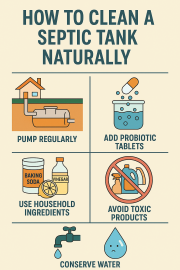
Infographic on how to clean a septic tank naturally: pump regularly, add probiotic tablets, use household ingredients like baking soda and vinegar, avoid toxic products, and conserve water
Quick answer: Cleaning a septic tank naturally means supporting its bacterial ecosystem instead of fighting it with harsh chemicals. The core habits: pump on schedule (every 3-5 years — no natural method replaces this), use probiotic tablets to keep bacteria strong, rely on septic-safe household ingredients like baking soda and vinegar instead of bleach or ammonia, conserve water so bacteria aren’t diluted, and control what goes down the drain in the first place.

A septic tank is one of the most important parts of any home that isn’t connected to a city sewer system. It works quietly in the background, processing waste and protecting your family’s health. But over time, sludge, grease, and non-biodegradable waste can build up inside the tank. If left unchecked, this buildup can cause blockages, foul odors, expensive repairs, or even full system failure. The good news? You don’t always need harsh chemicals to clean and maintain your septic system. In fact, learning how to clean your septic tank naturally is safer, more affordable, and better for the environment.

Why Choose Natural Septic Tank Cleaning?

Before diving into the “how,” it’s important to understand the “why.” Many chemical additives promise to clean septic tanks quickly. However, these harsh solutions often kill the beneficial bacteria that your septic system needs to break down waste. This creates an imbalance inside the tank, forcing sludge to accumulate faster. In contrast, natural methods support the tank’s microbial balance, extend its lifespan, and reduce the chances of groundwater contamination.

  • Eco-Friendly: Natural cleaning methods avoid toxic runoff that could harm local water supplies
  • Cost-Effective: Household ingredients like vinegar and baking soda are inexpensive and effective
  • Long-Term Protection: By supporting healthy bacteria, natural cleaning keeps your septic system functioning smoothly

1. Pumping: The First Step in Cleaning

While natural methods are excellent for maintenance, no septic tank can go forever without being pumped. Pumping removes solid waste and sludge that even bacteria cannot fully break down. For most households, pumping is necessary every 3–5 years. Think of it as a reset button that prepares your system for the benefits of natural cleaning methods.

2. Harness the Power of Bacteria

The heart of any septic system is its microbial ecosystem. Billions of bacteria inside your tank eat and digest organic waste. To clean and refresh your tank naturally, you need to support this bacterial activity.

Natural septic-safe products such as SEPTIFIX tablets work by releasing oxygen and stimulating the growth of beneficial bacteria. This process breaks down sludge, reduces odor, and prevents blockages. Unlike chemical cleaners, probiotic tablets feed the natural balance of your tank instead of destroying it.

3. Use Household Ingredients

You probably already have septic-safe cleaners in your kitchen. Here are three natural solutions you can use regularly to keep your system fresh:

  • Baking Soda: This versatile powder balances pH levels and prevents the tank from becoming too acidic, which can harm bacteria. Pour 1 cup of baking soda down the drain once a week to maintain a healthy balance
  • White Vinegar: An excellent natural disinfectant, vinegar can clean drains and pipes without harming beneficial bacteria. Mix one part vinegar with one part water to scrub sinks and toilets
  • Lemon Juice: Adds a fresh scent while naturally breaking down grease and grime. Use it in moderation for cleaning kitchen sinks or garbage disposals

4. Avoid Toxic Substances

Cleaning a septic tank naturally isn’t just about what you add — it’s also about what you avoid. Certain chemicals can kill bacteria and make natural cleaning ineffective. Stay away from: bleach-based cleaners, ammonia products, drain cleaners with strong chemicals, and antibacterial soaps (they kill helpful microbes too).

5. Enzyme-Based Additives

Along with bacteria, enzymes play a key role in breaking down organic material inside your tank. Enzyme-based additives accelerate the decomposition of fats, oils, and paper, helping your system stay clean naturally. These additives are safe, effective, and widely available. Use them monthly as part of your maintenance routine.

6. Control What Goes Into the Tank

One of the simplest ways to clean and maintain a septic tank naturally is to prevent problems in the first place. Be mindful of what you flush or pour down the drain. Items that don’t decompose naturally create buildup inside your tank. Avoid flushing:

  • Wipes (even “flushable” ones)
  • Feminine hygiene products
  • Grease and cooking oil
  • Coffee grounds
  • Harsh chemicals

7. Conserve Water

Excessive water entering your septic tank dilutes the natural bacteria and reduces efficiency. By practicing water conservation, you allow your septic system to break down waste more effectively. Try these habits:

  • Install low-flow showerheads and toilets
  • Repair leaky faucets and pipes quickly
  • Space out laundry loads instead of washing everything in one day

8. Maintain the Drainfield

Cleaning your septic tank naturally also involves protecting the drainfield — the area where treated water is released into the soil. Keep it functioning properly by:

  • Not parking vehicles on top of it
  • Directing rainwater away from the area
  • Planting only grass or shallow-rooted plants above it

9. Signs Your Tank Needs Attention

Even with natural cleaning methods, it’s important to recognize when your system is struggling. Common warning signs include:

  • Unpleasant odors in your yard or home
  • Slow drains and frequent backups
  • Gurgling sounds in pipes
  • Wet or spongy ground above the tank

If you notice any of these issues, it’s time to schedule an inspection and consider pumping — see the full breakdown in Signs Your Septic Tank Is Full.

10. Combine Routine Maintenance with Natural Cleaners

No single method is enough on its own. The most effective approach to cleaning your septic tank naturally is combining multiple habits: regular pumping, natural probiotics like SEPTIFIX, enzyme additives, water conservation, and careful waste disposal. When practiced together, these steps ensure your septic system stays clean, balanced, and long-lasting.

Learn More About SEPTIFIX →
Affiliate link — we may earn a commission at no extra cost to you

Frequently Asked Questions

Can you really clean a septic tank naturally?
Yes, in the sense of ongoing maintenance rather than a one-time deep clean. Natural methods — probiotic tablets, baking soda, vinegar, water conservation, and controlling what goes down the drain — support the tank’s bacterial ecosystem instead of killing it the way harsh chemicals do. But natural methods don’t replace pumping, which physically removes solids no bacteria can fully break down.
Why do chemical septic cleaners cause more harm than good?
Many chemical additives promise a quick clean, but harsh solutions like bleach, ammonia, and strong drain cleaners kill the beneficial bacteria the septic system relies on to break down waste. This creates an imbalance inside the tank, causing sludge to accumulate faster rather than slower.
What household ingredients are safe for a septic tank?
Baking soda (about 1 cup down the drain weekly) helps balance tank pH, white vinegar diluted with water is a safe disinfectant for sinks and toilets, and lemon juice in moderation naturally breaks down grease. All three support bacteria rather than killing them, unlike bleach or ammonia-based cleaners.
Does natural septic cleaning replace pumping?
No. Pumping removes solid waste and sludge that bacteria cannot fully break down, and most households still need it every 3-5 years regardless of how well they maintain the tank naturally. Natural methods extend the time between pump-outs and keep the system running smoothly, but they don’t replace physical solids removal.

Final Thoughts

Learning how to clean your septic tank naturally can save you thousands of dollars in repairs while giving you peace of mind. Natural cleaning isn’t just about dumping additives into the tank — it’s about creating an ecosystem where beneficial bacteria thrive, water usage is balanced, and harmful materials are kept out. Whether you’re using baking soda from your pantry, probiotic tablets like SEPTIFIX, or enzyme-based additives, the key is consistency. Regular attention and eco-friendly habits will keep your septic system healthy for years to come.

Remember: prevention is easier than repair. By following natural cleaning methods, you’ll protect your home, your health, and the environment — all while keeping your septic tank in top condition.

This article is for general informational purposes; individual results vary by system condition and usage. This post contains affiliate links — if you purchase through a link here, we may earn a commission at no extra cost to you.